Why Third-Party COA Testing Matters in Peptide Research
In peptide research, the quality and purity of a compound directly affects the validity of any result. A Certificate of Analysis (COA) from an independent laboratory is the single most important document for verifying what you are actually working with.
What is a Certificate of Analysis?
A COA is a document produced by an analytical laboratory that reports the identity and purity of a compound. For research peptides, it typically confirms two things: that the peptide is what it claims to be (identity), and how pure it is (the percentage of the intended compound versus impurities).
The key tests
- HPLC (High-Performance Liquid Chromatography) — measures purity by separating the sample into its components. A purity figure of 98%+ is generally considered high quality for research peptides.
- Mass Spectrometry (MS) — confirms the molecular weight, verifying the peptide’s identity matches its expected sequence.
Why “third-party” matters
A COA is only as trustworthy as its source. A certificate produced by the seller themselves carries an obvious conflict of interest. An independent, third-party laboratory has no stake in the result — which is why independent testing is the standard that serious researchers look for.
How to read a COA
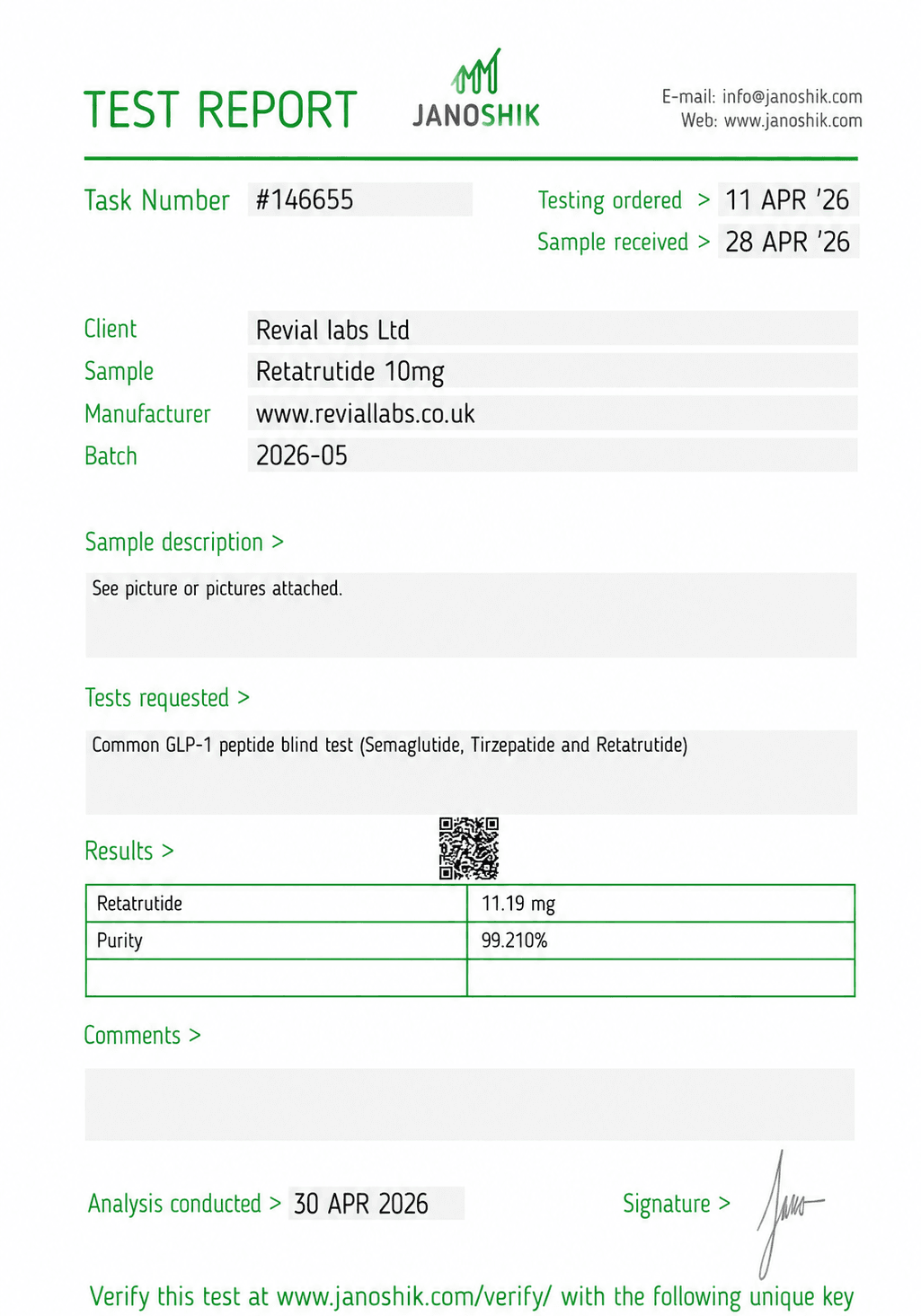
When reviewing a certificate, check that: the compound name and batch match the product you received; the HPLC purity figure is clearly stated; a mass spectrometry result confirms the molecular weight; and the testing laboratory is named and independent.
Our approach
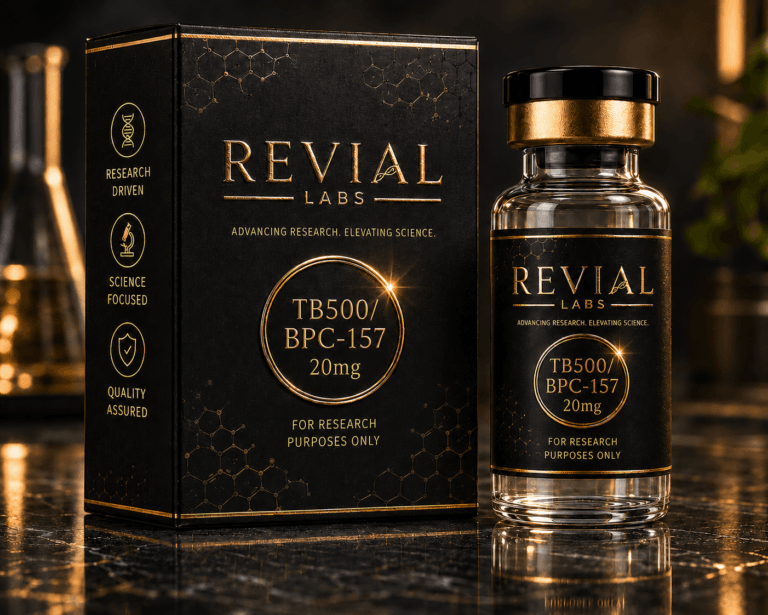
At Revial Labs, compounds are independently COA tested so researchers can verify identity and purity before use. Where applicable, test reports are made available for the compounds we supply.
This article is provided for educational purposes for laboratory research professionals. All Revial Labs compounds are supplied strictly for laboratory research use only and are not for human or veterinary use.