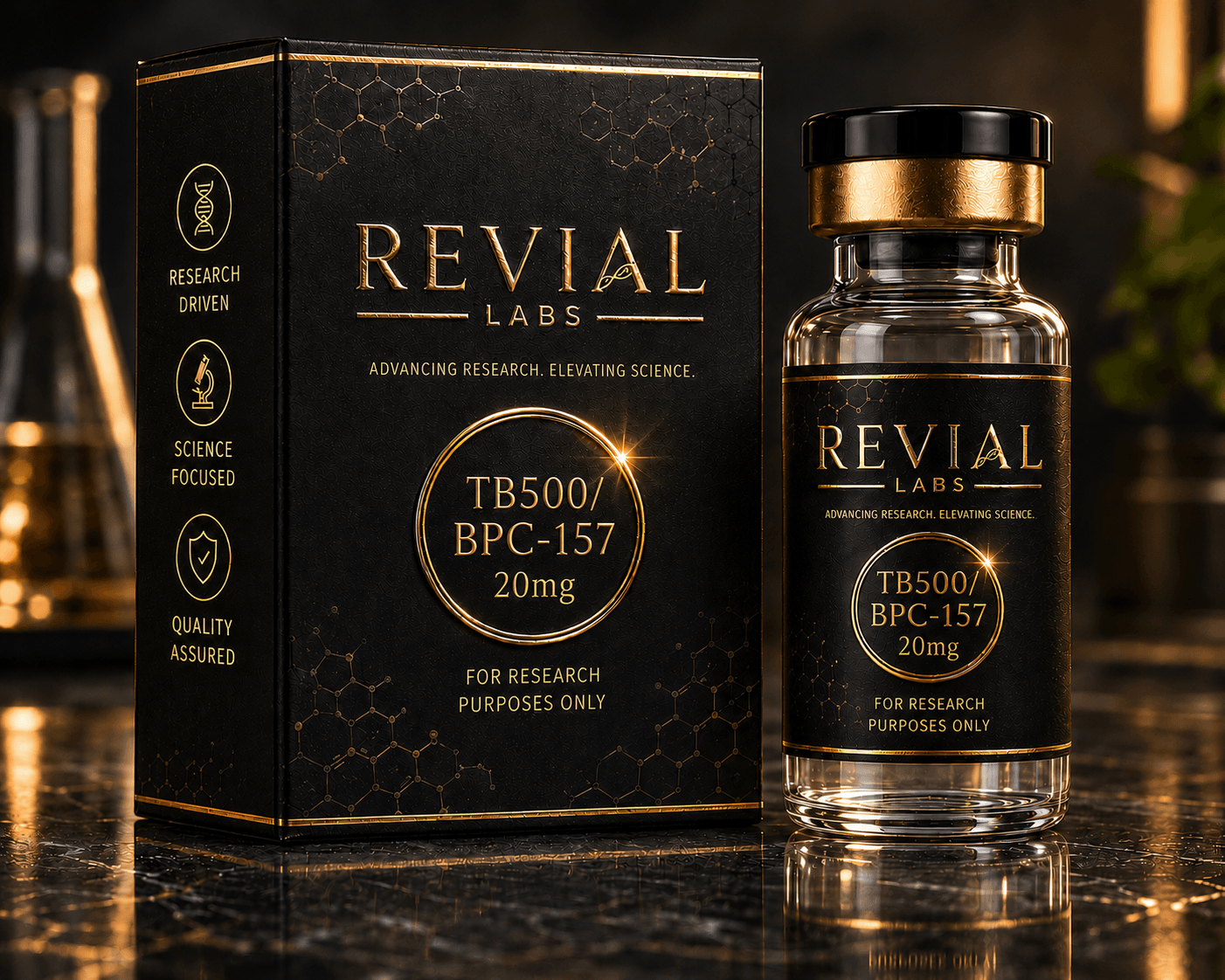
BPC-157 and TB-500: Why Two Peptides Are Studied Side by Side
Among the compounds most frequently referenced in peptide research, BPC-157 and TB-500 come up together more often than almost any other pairing. In community discussion they are sometimes grouped under an informal “recovery” or “Wolverine” label. This article looks at why the two are studied alongside each other — not as a usage guide, but as an overview of the distinct research rationales behind each, written for a laboratory research context.
Two different molecules, two different origins
Despite being grouped together, the two are structurally unrelated. BPC-157 is a synthetic peptide derived from a sequence identified in gastric juice; the “BPC” stands for Body Protection Compound, reflecting the tissue-focused direction of the early literature. TB-500 is a synthetic version of a region of Thymosin Beta-4, a naturally occurring protein involved in cell migration and actin regulation. One traces back to the gut, the other to a cytoskeletal protein — different families entirely.
Why researchers examine them together
The interest in the pairing comes from the fact that their proposed mechanisms in the preclinical literature are largely non-overlapping rather than redundant. BPC-157 research has centred on localised tissue and vascular pathways; TB-500 research has focused on cell migration and mobility across a broader systemic range. Because the two lines of investigation do not simply duplicate each other, researchers studying tissue-repair models often reference them side by side to compare distinct pathways — which is also why suppliers list pre-combined blends such as the Wolverine Blend and Glow Stack for research convenience.
What the pairing is not
It is worth being precise about the limits of the evidence. The bulk of the data on both peptides is preclinical — animal and in-vitro models — not controlled human clinical trials. Neither is an approved drug (see our overview of the 2026 FDA peptide reclassification for the current regulatory picture). Grouping them together reflects a research convention, not an established protocol, and says nothing about safety or efficacy in humans.
Individual reference points
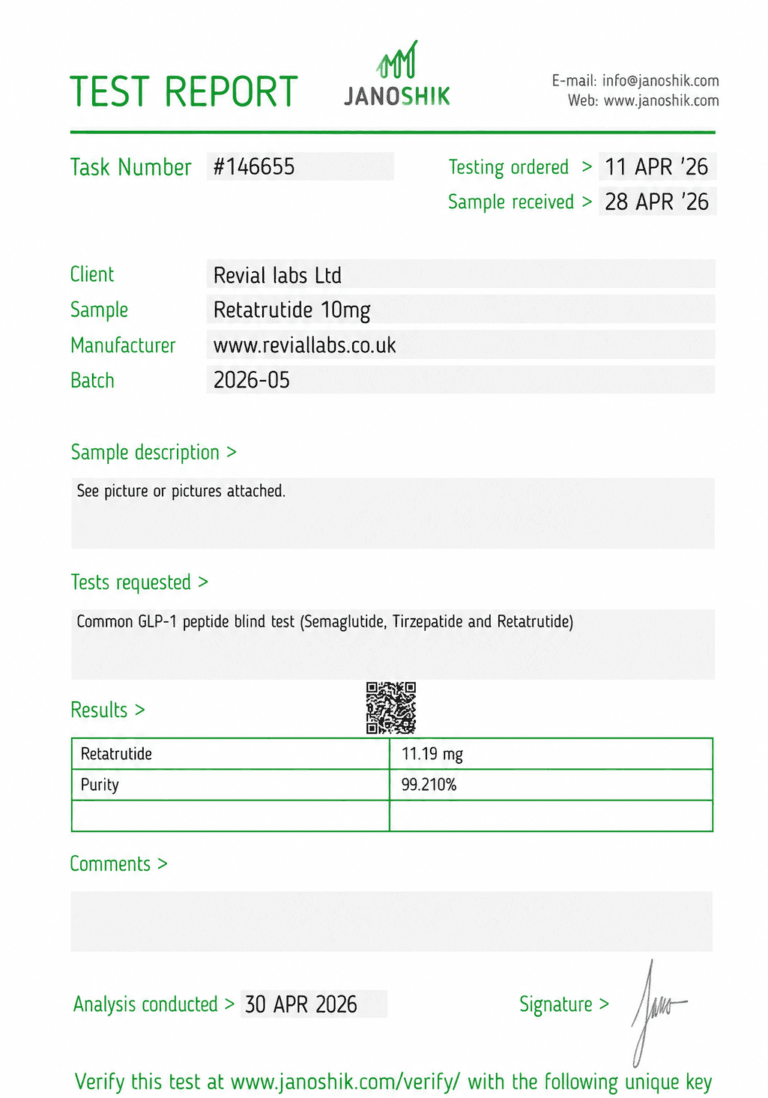
Researchers sourcing the two separately typically reference BPC-157 and TB-500 as standalone compounds, with the combined blends offered as a pre-mixed alternative. As with all research materials, purity, correct reconstitution, and third-party analysis are the practical variables that matter most for reproducible work.
This article is provided for informational purposes in a research context. It is not medical advice and does not describe or recommend human use. Revial Labs products are supplied strictly for laboratory research use only and are not for human consumption.
Compounds referenced in this article
Revial Labs supplies the following research compounds discussed above, each independently COA tested and dispatched from the UK for laboratory research use only:
You can calculate reconstitution volumes with our free Peptide Reconstitution Calculator.