
Triple Agonists: The Next Frontier After Dual Agonists
Much of the best-known metabolic peptide research has focused on single- and dual-receptor agonists. More recently, research attention has shifted toward triple agonists — compounds designed to engage three receptor targets at once. This article outlines what that shift means and why it has become one of the more actively discussed frontiers in the field, written for a laboratory research context.
From single to dual to triple
The progression is easiest to follow by receptor count. Early work centred on GLP-1 receptor agonists. Dual agonists such as Tirzepatide added a second target (GIP), and became a major focus of published metabolic research. The newer direction adds a third — glucagon receptor activity — producing the triple-agonist class, of which Retatrutide is the most frequently referenced example in current literature.
Why the third receptor is of interest
The research rationale for adding glucagon-receptor activity is that the three pathways are studied for complementary rather than identical effects in metabolic models. Combining them in a single molecule is of interest to researchers precisely because it allows the interaction of all three to be examined together, rather than inferred from separate compounds. This is an area of active preclinical and early-stage investigation, not settled science.
Where the evidence currently stands
Triple agonists are a genuinely emerging area. Much of the published data is recent, and the compounds are the subject of ongoing study rather than long-established literature. None of the compounds referenced here is an approved drug, and the broader regulatory backdrop is itself in flux — our overview of the 2026 FDA peptide reclassification covers the current position. For researchers, the practical point is that this is a fast-moving frontier where primary literature should be tracked directly.
Reference points for researchers
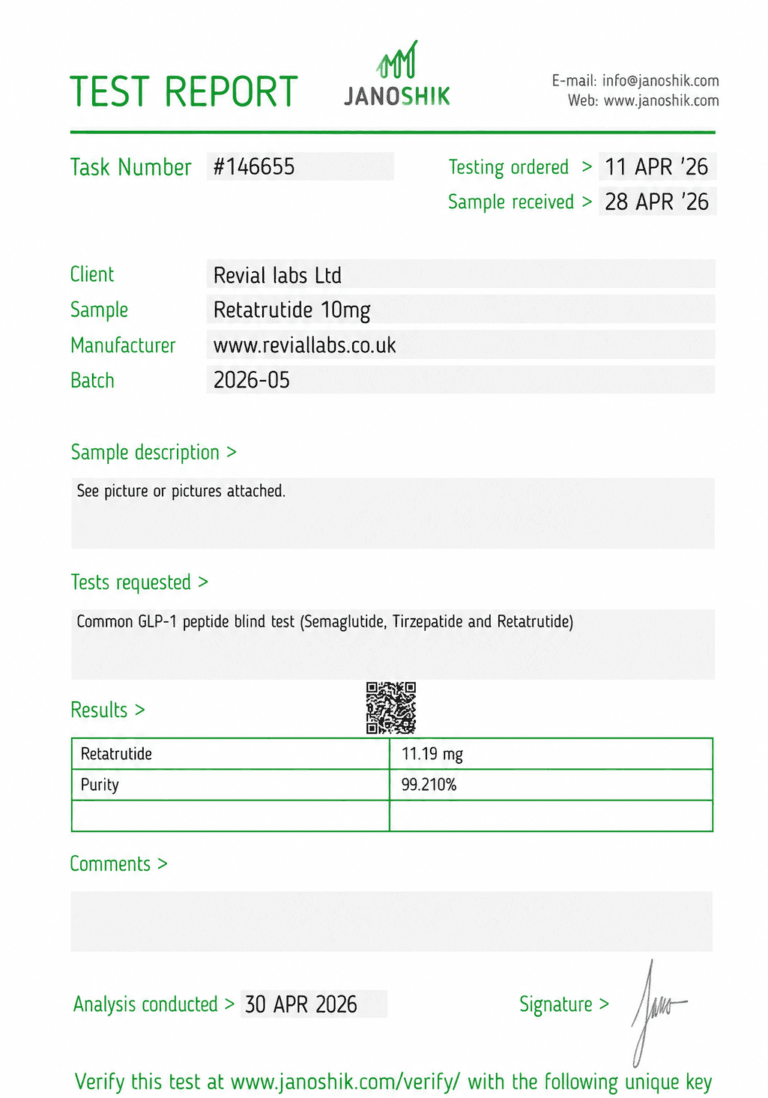
Researchers following this area typically reference the dual agonist Tirzepatide and the triple agonist Retatrutide as the two most-studied comparison points. As with any research material, purity, correct reconstitution, and independent third-party analysis remain the variables that most affect reproducible results.
This article is provided for informational purposes in a research context. It is not medical advice and does not describe or recommend human use. Revial Labs products are supplied strictly for laboratory research use only and are not for human consumption.
Compounds referenced in this article
Revial Labs supplies the following research compounds discussed above, each independently COA tested and dispatched from the UK for laboratory research use only:
You can calculate reconstitution volumes with our free Peptide Reconstitution Calculator.