Wolverine Blend Explained: BPC-157 + TB-500 (UK Research Guide)
The Wolverine blend is the most common two-peptide combination in tissue-repair research: BPC-157 and TB-500 in a single vial. This guide explains what is in it, why the two peptides are studied together, how the blend compares with GLOW and KLOW, and what to check when sourcing it in the UK.
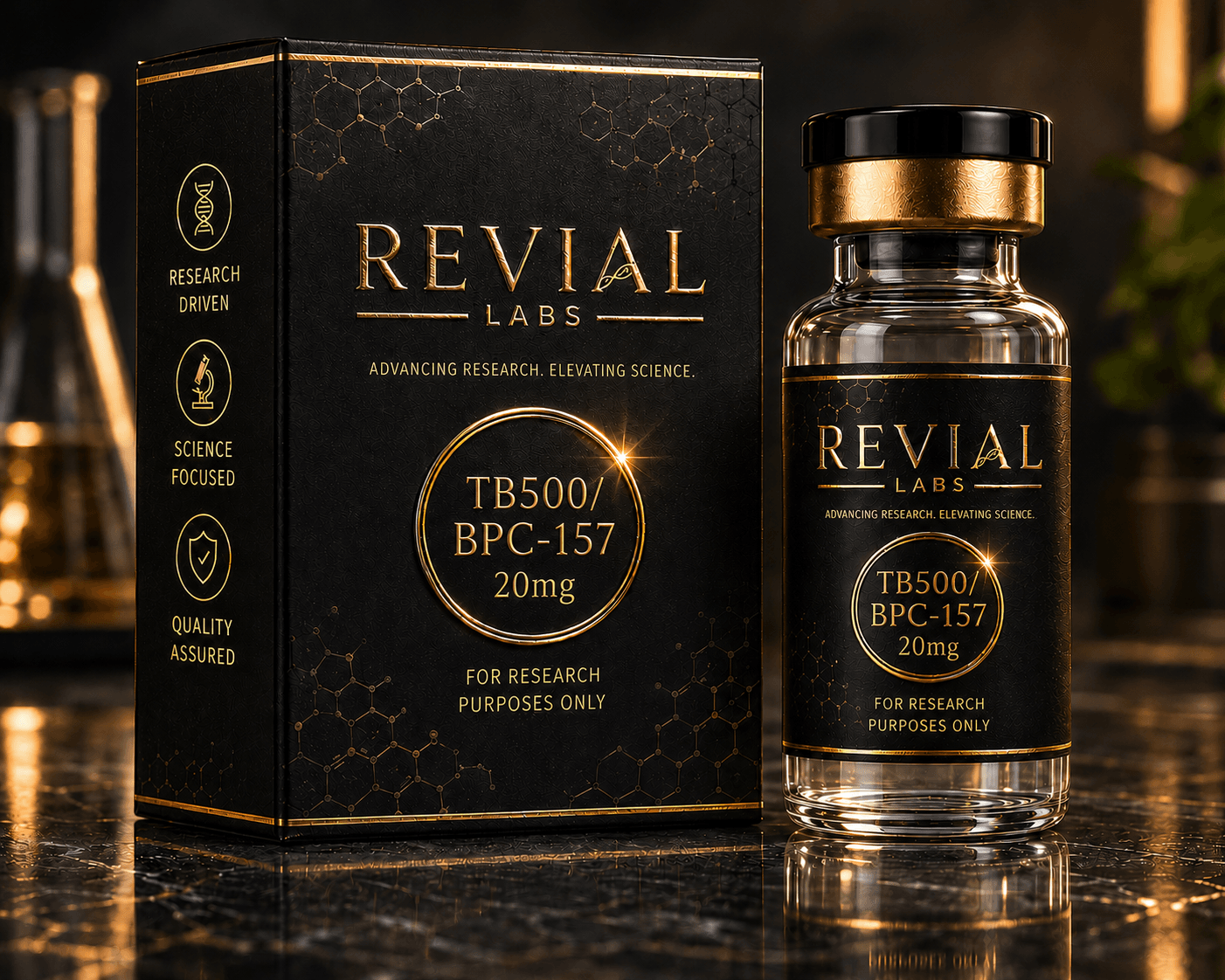
Quick summary: The Wolverine blend combines 10mg BPC-157 and 10mg TB-500 (20mg total) in one lyophilised vial. The two peptides are studied through different mechanisms in pre-clinical repair models, which is why they are so often researched together. Revial Labs supplies the Wolverine Blend 20mg from UK stock, for laboratory research use only.
What Is in the Wolverine Blend?
| Component | Amount per vial | What it is |
|---|---|---|
| BPC-157 | 10mg | A 15-amino-acid synthetic peptide derived from a sequence found in gastric protein |
| TB-500 | 10mg | A synthetic peptide based on thymosin beta-4, an actin-binding protein |
Why Study BPC-157 and TB-500 Together?
The interest in combining them comes from the idea that they act on different parts of the repair process:
- BPC-157 has been studied in animal models in relation to blood-vessel formation, nitric-oxide signalling and the healing of tendon, ligament and gut tissue.
- TB-500 has been studied for its effect on actin and cell migration, along with wound-healing and angiogenesis models.
Because the mechanisms are different, researchers look at whether studying them together gives a more complete picture than either alone. Most of this work is pre-clinical, so it should not be read as established effects in people.
Wolverine vs GLOW vs KLOW
| Blend | Contents | Total |
|---|---|---|
| Wolverine | BPC-157 10mg + TB-500 10mg | 20mg |
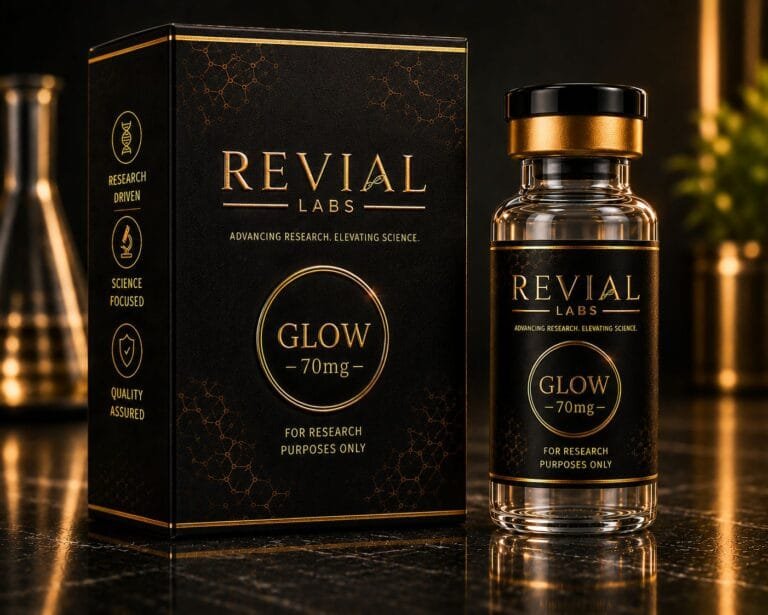
| GLOW | BPC-157 10mg + TB-500 10mg + GHK-Cu 50mg | 70mg |
| KLOW | BPC-157 10mg + TB-500 10mg + GHK-Cu 50mg + KPV 10mg | 80mg |
GLOW adds the copper peptide GHK-Cu, which is studied in collagen and skin research, and KLOW adds KPV as well. Our KLOW vs GLOW guide compares those two in more detail.
Blend vs Separate Vials
A blend is convenient: one vial and one reconstitution step, with a fixed ratio between the two peptides. Separate vials of BPC-157 and TB-500 give more flexibility if a protocol needs a different ratio. Which suits a study depends on the design.
Handling and Storage
- Keep the lyophilised vial at 2–8°C, away from light.
- Reconstitute with bacteriostatic water using sterile technique, then refrigerate.
- Remember that the vial holds 20mg in total, 10mg of each peptide, when working out concentrations.
Our peptide reconstitution calculator breaks blends down per compound, and our storage guide covers stability after mixing.
What to Check When Sourcing a Wolverine Blend
- The stated amount of each peptide, not just the total.
- An independent COA that identifies both BPC-157 and TB-500.
- A matching batch number on the vial.
- A UK company you can contact, with clear research-use labelling.
Frequently Asked Questions
What is the Wolverine blend?
A research blend of BPC-157 10mg and TB-500 10mg in one vial, 20mg in total.
Why is it called Wolverine?
It is a market nickname that refers to the blend’s use in tissue-repair research. It is not a scientific name.
What is the difference between Wolverine and GLOW?
GLOW contains the same BPC-157 and TB-500 plus 50mg of GHK-Cu.
Is the Wolverine blend legal in the UK?
Neither peptide is a controlled drug in the UK, and neither is a licensed medicine. The blend is supplied for laboratory research use only.
How should the blend be stored?
Keep the powder at 2–8°C away from light and refrigerate after reconstitution.
All Revial Labs products are supplied strictly for laboratory research use. Not for human consumption, not for veterinary use, and no therapeutic claims are made.