FDA Advisory Committee Recommends Six Peptides for Compounding: BPC-157, KPV, TB-500, MOTS-C, Epitalon & Semax
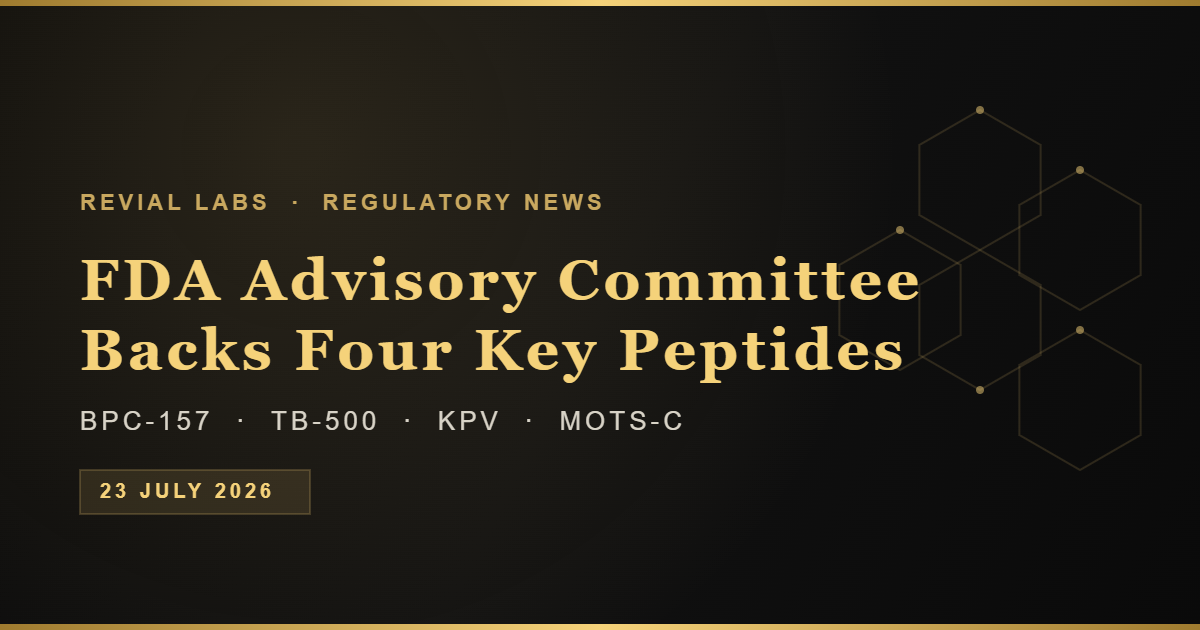
Across 23–24 July 2026, an FDA advisory committee voted to recommend six widely studied peptides — BPC-157, KPV, TB-500, MOTS-C, Epitalon and Semax — for addition to the 503A Bulk Drug Substances List, while rejecting one (emideltide / DSIP). For anyone following the peptide research space, it was one of the most significant regulatory developments in years. Here is a clear, factual breakdown of what actually happened.
What is the 503A Bulks List?
Section 503A of the US Federal Food, Drug, and Cosmetic Act sets the conditions under which a compounded drug can be prepared by a licensed compounding pharmacy against an individual prescription. The “503A Bulks List” is the list of bulk substances those pharmacies are permitted to use. In 2023, more than a dozen peptides were placed in “Category 2” — effectively barred from compounding — on the grounds of potential safety concerns.
What the committee decided
The FDA’s Pharmacy Compounding Advisory Committee (PCAC) met on 23–24 July 2026 to review seven peptides. On the first day, the 15-seat committee voted in favour of all four substances it considered:
- BPC-157 — recommended 8–6 with one abstention (reviewed in the context of ulcerative colitis)
- KPV — recommended 8–6–1 (reviewed for wound healing and inflammatory conditions)
- TB-500 — recommended 8–6–1 (tissue regeneration)
- MOTS-C — recommended 7–5 with two abstentions (metabolic applications)
On the second day, the committee reviewed three further peptides — recommending two and rejecting one:
- Epitalon — recommended (longevity and telomere research)
- Semax — recommended (cognitive and neuroprotection research)
- Emideltide (DSIP) — rejected — the only one of the seven peptides not recommended
That brought the total to six of seven peptides recommended across the two days. Notably, the committee’s recommendations went against the advice of the FDA’s own scientific staff, who had recommended against the substances citing a general lack of clinical data.
Important: this is not FDA approval
This is the part the headlines often blur. There are three separate regulatory events, and they are not the same thing:
- Removal from Category 2 — already happened for these peptides, effective 23 April 2026.
- A PCAC recommendation — what happened on 23 July 2026. It is advisory only.
- Final placement on the compoundable list — still to come, and requires a formal FDA determination and rulemaking process.
The FDA is not bound by the committee’s vote. These peptides are not FDA-approved finished drugs, and the recommendation does not change that.
Why this matters for the research community
Regardless of the final outcome, the vote signals a shifting regulatory conversation around peptides that were pushed to the margins in 2023. Several of the substances reviewed — BPC-157, TB-500, KPV and MOTS-C among them — are widely studied in regenerative and metabolic research, and clearer regulatory frameworks tend to bring greater scrutiny of quality and sourcing. That reinforces something we have always emphasised: the importance of independent COA testing and knowing exactly what a compound is and where it came from.
What happens next
The FDA is expected to convene a further peptide-focused advisory session before the end of February 2027, covering additional substances such as GHK-Cu and Melanotan II. Any final change to the 503A list will follow the formal rulemaking process, which takes time. We will continue to follow developments as they unfold.
Compounds referenced in this article
Revial Labs supplies the following research peptides discussed above, each independently COA tested and dispatched from the UK for laboratory research use only:
You can also work out reconstitution volumes with our free Peptide Reconstitution Calculator.
This article is provided for educational purposes for laboratory research professionals and summarises publicly reported regulatory news. It is not legal, medical or regulatory advice. All Revial Labs compounds are supplied strictly for laboratory research use only and are not for human or veterinary use.