Kisspeptin-10: What It Is and What It’s Known For
Kisspeptin-10 is a GPR54 agonist with a central role in reproductive axis and gonadotrophin research. Here is what it is, what it is known for, and what to look for when sourcing it.
What is Kisspeptin-10?
Kisspeptin-10 is the 10-amino-acid C-terminal fragment of the kisspeptin family of peptides (also known as metastin or KISS1 peptides). The full kisspeptin precursor is encoded by the KISS1 gene and processed into fragments of varying length (kisspeptin-54, -14, -13, -10). The 10-residue form shares the receptor-binding domain with all longer forms and is the most commonly used in research settings due to its defined, manageable structure. It acts as an agonist at GPR54 (also known as KISS1R), a G-protein-coupled receptor.
What is it known for?
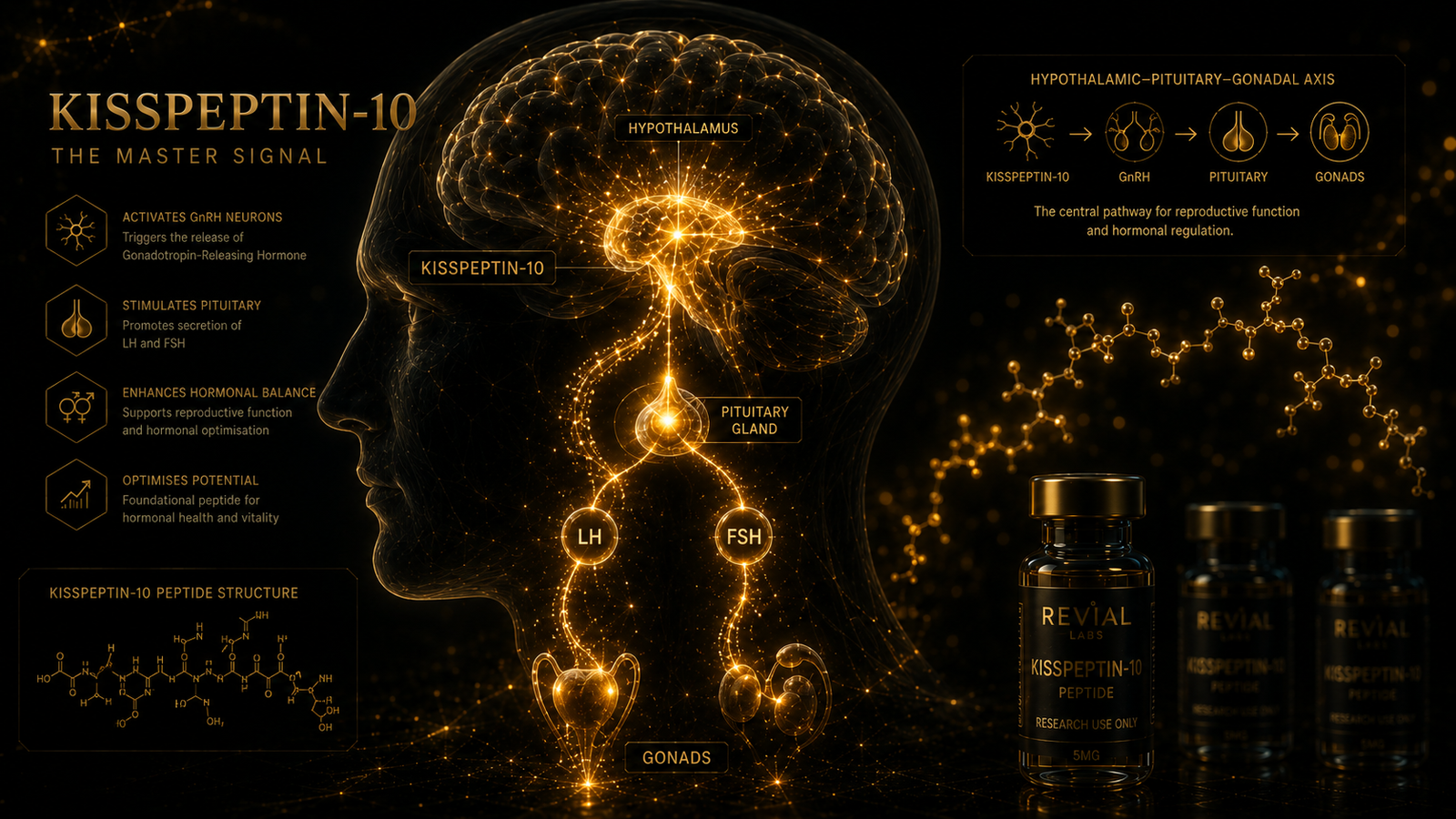
Kisspeptin-10 is best known in the context of the hypothalamic-pituitary-gonadal (HPG) axis — specifically for its role as the primary activator of GnRH (gonadotrophin-releasing hormone) pulsatility.
GnRH Pulsatility
GPR54 receptors in the arcuate and anteroventral periventricular nuclei of the hypothalamus gate the pulsatile release of GnRH. Kisspeptin-10 is the most potent known activator of this system. In research models, its administration reliably triggers GnRH pulses, which in turn stimulate LH (luteinising hormone) and FSH (follicle-stimulating hormone) release from the pituitary.
LH Surge Research
The precise control of LH pulsatility that kisspeptin-10 enables has made it central to research on the reproductive hormone axis — particularly in models studying GnRH deficiency, hypogonadism, and puberty timing.
Clinical Human Data
Unlike many research peptides, kisspeptin-10 has been studied in human subjects in published academic trials, primarily at Imperial College London and other reproductive endocrinology centres, providing an unusually detailed profile of its GPR54-mediated effects in humans.
The Receptor Desensitisation Variable
A key research consideration with kisspeptin-10 is GPR54 receptor desensitisation under continuous stimulation. Unlike GnRH agonists (which paradoxically suppress GnRH by causing receptor downregulation with continuous exposure), kisspeptin-10 maintains pulsatility when dosed intermittently. Continuous infusion protocols produce different receptor responses than pulsatile dosing — a distinction that is central to understanding kisspeptin research designs.
Properties Researchers Value
- GPR54 selectivity — well-defined receptor target within the HPG axis.
- GnRH pulse control — direct mechanistic control over the upstream regulator of reproductive hormone release.
- Human trial data — unusually well-characterised in human subjects for a research peptide.
- Defined structure — 10 amino acids, confirmed by mass spectrometry.
What to Look for When Sourcing
Independent COA with HPLC purity and mass spectrometry identity from a named laboratory. Kisspeptin-10 MW is approximately 1302 Da. See our guide on why COA testing matters.
Reconstitution
Kisspeptin-10 is supplied lyophilised and dissolved in bacteriostatic water before use. Our reconstitution guide covers the full process. Use the Peptide Calculator for concentration and draw volumes.
Our Approach
At Revial Labs, our Kisspeptin-10 10mg is independently COA tested so researchers can verify identity and purity before use. Every compound we supply is intended strictly for laboratory research.
Compounds Referenced in This Article
This article is provided for educational purposes for laboratory research professionals. All Revial Labs compounds are supplied strictly for laboratory research use only and are not for human or veterinary use.