BPC-157 UK: The Complete Research Guide (2026)
BPC-157 is one of the most widely studied research peptides in the UK, and one of the most searched. It also attracts more misinformation than almost any other compound. This guide sets out what BPC-157 is, what the published research actually covers, where it stands legally in the UK in 2026, and what to look for when you buy it for laboratory work.
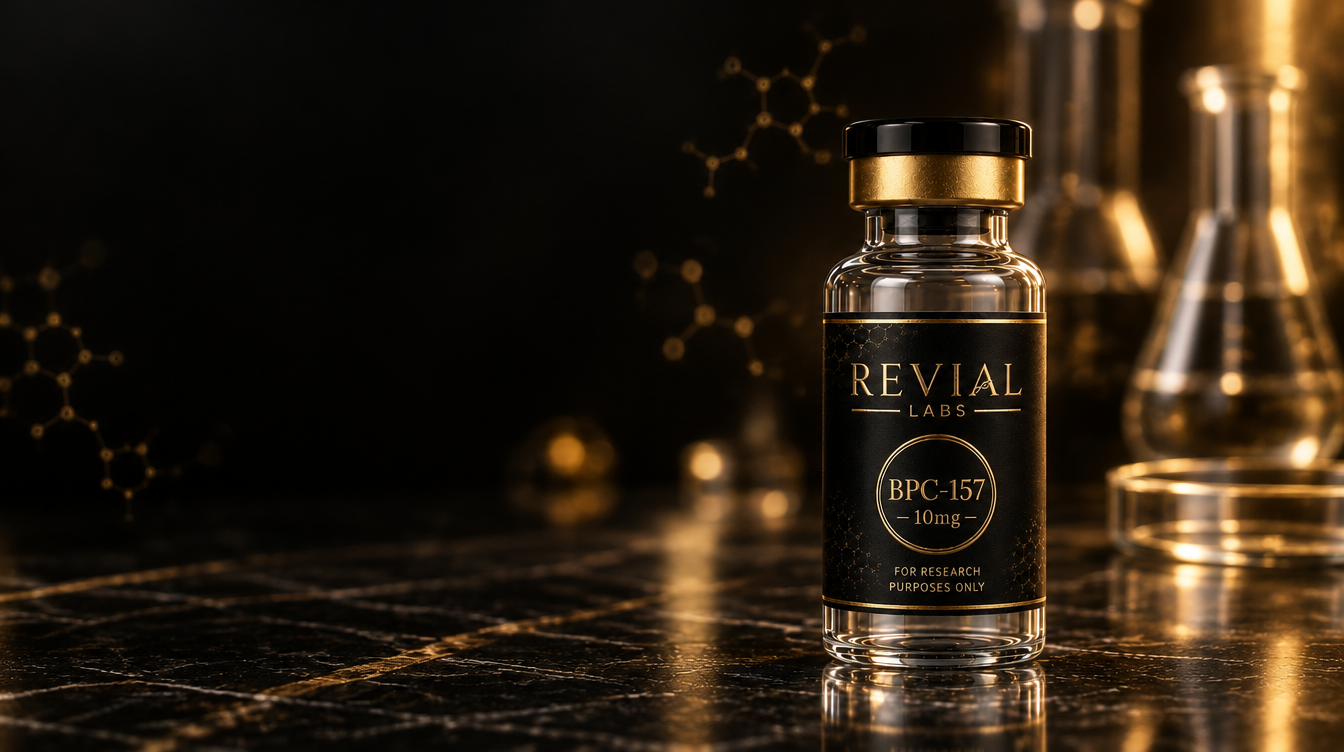
Quick summary: BPC-157 is a synthetic 15-amino-acid peptide derived from a protein found in gastric juice. It has been studied mainly in animal and cell models of tendon, ligament, gut and wound repair. It is not a licensed medicine in the UK, it is on the WADA prohibited list, and it should only be bought as a research chemical with a batch-specific Certificate of Analysis. Revial Labs supplies BPC-157 10mg from UK stock at £29.99.
Updated November 2026.
BPC-157 at a Glance
| Also known as | Body Protection Compound-157, BPC 157. Referred to as PL 14736 in some published literature |
|---|---|
| Compound type | Synthetic pentadecapeptide, a partial sequence of a protein found in human gastric juice |
| Sequence length | 15 amino acids (Gly-Glu-Pro-Pro-Pro-Gly-Lys-Pro-Ala-Asp-Asp-Ala-Gly-Leu-Val) |
| CAS number | 137525-51-0 |
| Molecular weight | Approximately 1,419 Da |
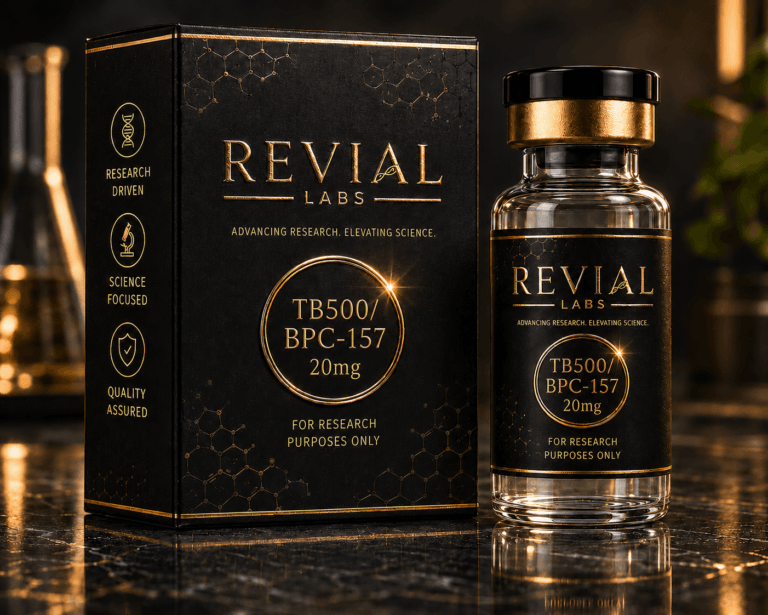
| Research format | Lyophilised (freeze-dried) powder in sealed 10mg vials. BPC-157 10mg is also included in the Wolverine, GLOW and KLOW blends |
| Research status | Research compound. Not licensed by the MHRA, and on the WADA prohibited list (S0) |
What Is BPC-157?
BPC stands for “Body Protection Compound”. BPC-157 is a pentadecapeptide (a chain of 15 amino acids) with the sequence Gly-Glu-Pro-Pro-Pro-Gly-Lys-Pro-Ala-Asp-Asp-Ala-Gly-Leu-Val. It is a partial sequence of a larger protein first isolated from human gastric juice, and it is made synthetically for research.
One feature that makes BPC-157 interesting to researchers is its stability. Unlike many peptides, it has been reported to remain stable in gastric juice for extended periods in laboratory testing, which is part of why it has been studied in gut models as well as musculoskeletal ones.
For a shorter introduction, see BPC-157: What It Is and What It’s Known For.
What Does the Published Research Cover?
Most of the BPC-157 literature comes from preclinical work, largely rodent studies and cell cultures. Human clinical data is very limited. The main research areas are:
- Tendon and ligament models – studies of tendon-to-bone healing and tendon fibroblast outgrowth and migration.
- Gastrointestinal models – research into ulcer, fistula and inflammatory bowel models, which links back to the peptide’s gastric origin.
- Wound healing and angiogenesis – work examining blood-vessel formation and granulation tissue in wound models.
- Muscle and bone models – studies of muscle crush injury and bone healing in animals.
- Signalling pathways – research into the nitric oxide system, VEGFR2 expression and growth hormone receptor expression in tendon fibroblasts.
These are research directions, not proven effects in people. Results from rodent studies often fail to translate into humans, which is why BPC-157 remains a research compound rather than a medicine.
Is BPC-157 Legal in the UK?
BPC-157 is not a controlled drug under the Misuse of Drugs Act, so it is legal to buy and possess for research purposes in the UK. However:
- It is not licensed by the MHRA as a medicine, and it cannot legally be sold for human consumption.
- It is banned in sport. WADA has listed BPC-157 under S0 (non-approved substances) since 2022, so it is prohibited at all times for tested athletes.
- Reputable UK suppliers sell it strictly labelled “for research use only” and will not give advice on human use.
If a seller makes health claims, offers usage instructions or markets BPC-157 as a supplement, treat that as a red flag about the supplier as a whole.
Forms of BPC-157 You’ll See
| Form | What it is | Research notes |
|---|---|---|
| Lyophilised vial | Freeze-dried powder in a sealed vial | Most stable form for storage and transport; the standard research format |
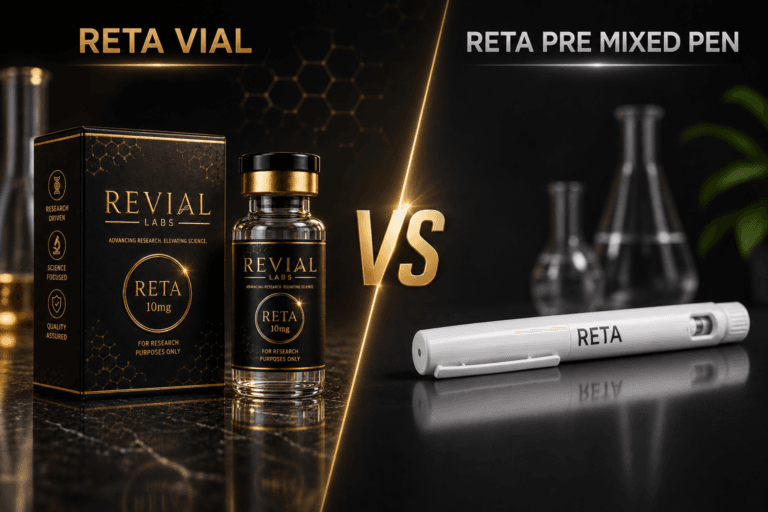
| Pre-mixed pen or solution | Peptide already dissolved in liquid | Shorter shelf life and harder to verify; see our stability comparison |
| Capsules or “oral” products | Often sold as supplements | Usually marketed for human use, which is not a legitimate research supply |
| Blends | BPC-157 combined with other peptides | e.g. Wolverine (BPC-157 + TB-500), GLOW and KLOW |
BPC-157 Prices in the UK (2026)
UK prices for a 10mg vial of BPC-157 typically sit between about £25 and £45, depending on testing, stock location and delivery speed. Very low prices are usually a sign of untested or overseas stock. Revial Labs prices:
| Product | Contents | Price |
|---|---|---|
| BPC-157 10mg | 10mg BPC-157 | £29.99 |
| Wolverine Blend 20mg | 10mg BPC-157 + 10mg TB-500 | £49.99 |
| Glow Stack 70mg | GHK-Cu 50mg + BPC-157 10mg + TB-500 10mg | £74.99 |
| Klow Blend 80mg | Glow Stack + KPV 10mg | £79.99 |
How to Check BPC-157 Quality
Because BPC-157 is unlicensed, quality varies hugely between suppliers. Before you buy, check:
- A batch-specific COA – it should show HPLC purity (look for ≥98–99%) and mass spectrometry confirming the correct molecular weight (around 1,419 Da).
- Independent testing – third-party lab reports you can verify are far more useful than in-house certificates. Read why COA testing matters.
- Accurate fill – a 10mg vial should contain 10mg. Under-filled vials are a common problem.
- UK stock – stock already in the UK avoids customs delays and long periods in uncontrolled temperatures.
You can see our published certificates on the Lab Results page.
How to Choose a Reliable UK BPC-157 Supplier
Many UK websites now list BPC-157, and quality varies widely. Before ordering for research, check that the supplier:
- Publishes an independent, batch-matched COA. The certificate should come from a third-party lab and be verifiable on that lab’s own website, with a batch number that matches the vials you receive.
- Shows HPLC purity and identity. Look for purity of 99% or more by HPLC, plus mass spectrometry confirming the compound really is BPC-157.
- Is a real UK business. A registered company number, a UK address and UK stock mean no customs delays and someone accountable if something goes wrong.
- Supplies lyophilised vials. Freeze-dried powder is far more stable than pre-mixed pens. See Pre-Mixed Pens vs Lyophilised Vials.
- Makes no health claims. Legitimate research suppliers sell under clear research-use-only terms and do not give advice on human use.
- Prices sensibly. A price far below what other established suppliers charge is a warning sign, not a bargain.
Read more in Why Third-Party COA Testing Matters, and see every Revial Labs certificate on our Lab Results page.
Comparing BPC-157 Prices
The fairest way to compare suppliers is price per mg: divide the vial price by the number of milligrams it contains. A 10mg vial at £40 works out at £4.00 per mg, for example. For blends, check the amount of BPC-157 in the vial rather than the total blend weight. Compare like with like, and always weigh price against the quality checks above.
Where Revial Labs sits: we focus on verified quality rather than being the cheapest. Every product is manufactured to 99% purity or higher by HPLC and independently tested, with certificates published on our Lab Results page. Orders ship from UK stock by Royal Mail Tracked, and you can reach a real person by email or WhatsApp if you have a question about your order. See what other researchers say on our reviews page.
Reconstitution and Storage
Lyophilised BPC-157 is reconstituted with bacteriostatic water before laboratory use. Our step-by-step guide on how to reconstitute research peptides covers the technique, and the Peptide Reconstitution Calculator works out concentration for any vial size and water volume.
Unopened vials are best kept at 2–8°C, away from light. Once reconstituted, keep the solution refrigerated and use it within about four weeks. Our full guide on how to store peptides explains the reasons behind each step.
BPC-157 vs Related Peptides
BPC-157 is often studied alongside other repair-focused peptides. If you are comparing options, these guides go into more detail:
- BPC-157 vs TB-500 – how the two most common repair peptides differ
- BPC-157 and TB-500 as a research pairing
- BPC-157 vs KPV – repair versus anti-inflammatory research
- KLOW vs GLOW – the two multi-peptide blends that contain BPC-157
Buying BPC-157 From Revial Labs
- UK stock, dispatched the same day on orders placed before 2pm (Monday to Friday)
- Royal Mail Tracked delivery, usually next working day
- ≥99% purity, HPLC verified, with independent certificates
- Bacteriostatic water and the Starter Accessory Pack available in the same order
Related Research Guides
- TB-500 UK research guide
- Wolverine blend (BPC-157 + TB-500) explained
- MOTS-c UK research guide
- NAD+ UK research guide
Frequently Asked Questions
Can you buy BPC-157 legally in the UK?
Yes, for research purposes. BPC-157 is not a controlled substance, but it is not a licensed medicine and cannot be sold for human use. Legitimate UK suppliers sell it for laboratory research only.
How much does BPC-157 cost in the UK?
A 10mg vial usually costs between £25 and £45. Revial Labs sells BPC-157 10mg for £29.99, with blends containing BPC-157 from £49.99.
Is BPC-157 banned in sport?
Yes. WADA has listed BPC-157 as a prohibited non-approved substance (S0) since 2022, so it is banned in and out of competition.
Is BPC-157 approved by the MHRA?
No. BPC-157 is not approved by the MHRA, the FDA or any equivalent regulator for human or veterinary use.
What is the difference between BPC-157 and TB-500?
BPC-157 is a 15-amino-acid fragment of a gastric protein, while TB-500 is a synthetic fragment of thymosin beta-4. They are studied in overlapping repair models but act through different pathways. See BPC-157 vs TB-500.
How should BPC-157 be stored?
Keep unopened vials at 2–8°C away from light. After reconstitution, store the solution in the fridge and use it within about four weeks.
What other names is BPC-157 sold under?
You may see it listed as Body Protection Compound-157, BPC 157 or BPC, and some published literature refers to it as PL 14736. Whatever the listing calls it, the certificate of analysis should name the compound as BPC-157 and confirm its identity by mass spectrometry (around 1,419 Da).
How do I compare BPC-157 prices?
Work out the price per mg by dividing the vial price by its size in mg. For blends, use the amount of BPC-157 in the vial rather than the total weight. Only compare suppliers that publish an independent, batch-matched COA.
BPC-157 vials or pens?
Lyophilised vials are the more stable format for storage and transport. Pre-mixed pens hold the peptide in solution, which degrades faster and is harder to verify, especially if the temperature is not controlled.
Should I choose a single BPC-157 vial or a blend?
A single 10mg vial suits studies that need to isolate BPC-157 or vary its amount independently. Blends such as Wolverine, GLOW and KLOW combine it with other peptides at a fixed ratio in one vial, which suits studies designed around that combination.
All products supplied by Revial Labs are intended for in vitro laboratory research use only. They are not for human or veterinary use, and nothing in this article is medical advice or a recommendation for use in people or animals.