KPV UK: The Complete Research Guide (2026)
KPV is one of the smallest peptides in research use: just three amino acids. It comes from the tail end of alpha-melanocyte-stimulating hormone (α-MSH), a natural hormone with well-known anti-inflammatory activity. This guide explains what KPV is, how it is thought to work, what it has been studied for, how it compares with BPC-157 and what to check when sourcing it in the UK.
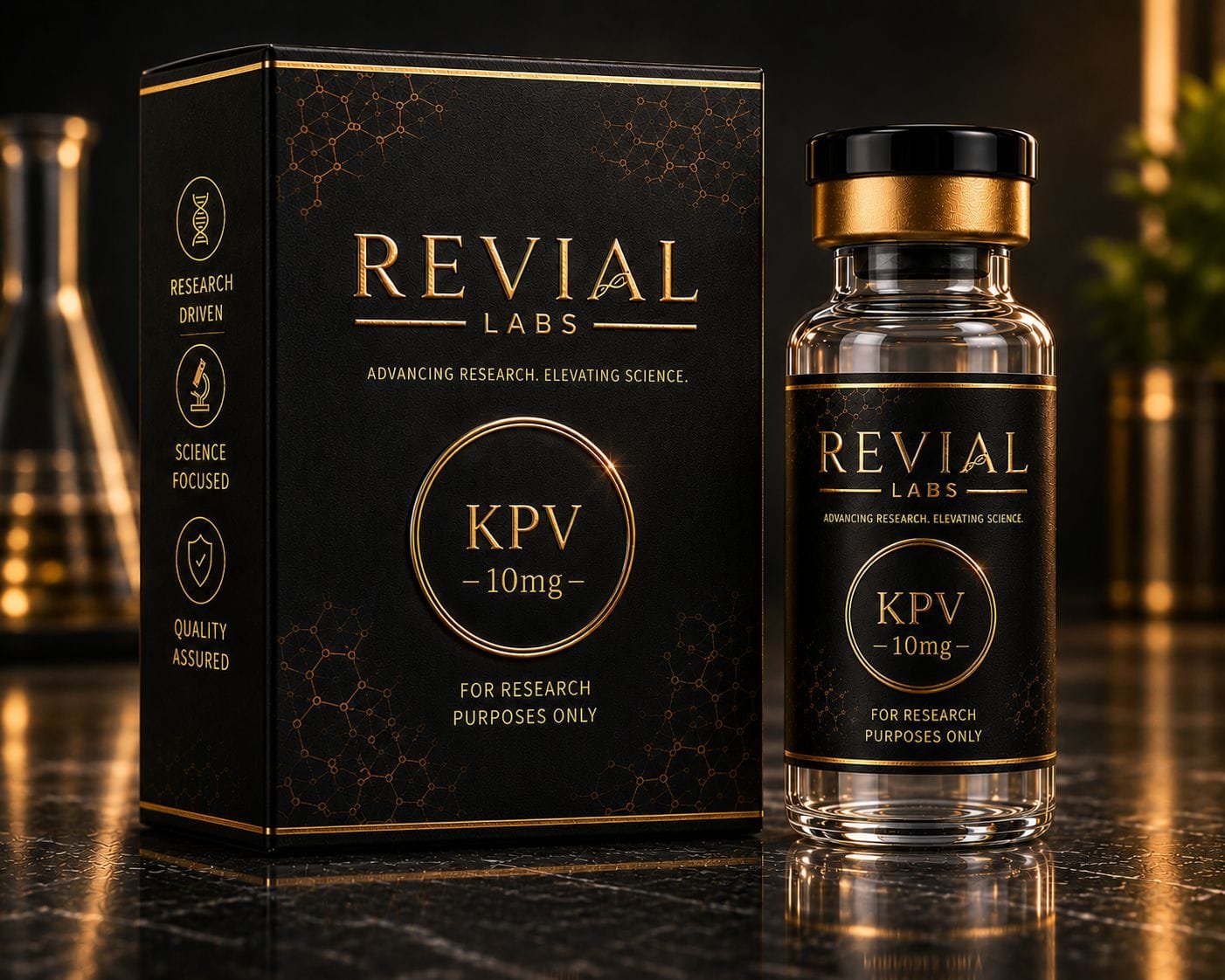
Quick summary: KPV is the tripeptide Lys-Pro-Val, the C-terminal end (residues 11-13) of α-MSH. It is studied mainly in inflammation research, particularly gut and skin models. Revial Labs supplies research-grade KPV 10mg from UK stock, for laboratory research use only. Updated November 2026.
KPV at a Glance
| Sequence | Lys-Pro-Val (3 amino acids) |
| Origin | C-terminal fragment (11-13) of alpha-MSH |
| Type | Anti-inflammatory tripeptide |
| Research area | Inflammation, gut lining, skin and wound models |
| UK status | Not a licensed medicine. Supplied for laboratory research only |
What Is KPV?
Alpha-MSH is a 13-amino-acid hormone best known for skin pigmentation, but it also dampens inflammation. In the 1990s researchers found that much of the anti-inflammatory activity could be reproduced by its last three amino acids alone, Lys-Pro-Val. Because KPV is so small, it is simple to make and has been studied as a stripped-down version of α-MSH’s anti-inflammatory signal, without its pigmentation effects.
How Is KPV Thought to Work?
- NF-κB pathway. Cell studies report that KPV reduces activation of NF-κB, a central switch for inflammatory signalling, and lowers the release of inflammatory cytokines.
- Entry into gut cells. Research suggests KPV is carried into intestinal cells by the peptide transporter PepT1, which is more active in inflamed gut tissue. This is a key reason it is studied in gut models.
- Not mainly a melanocortin-receptor agonist. Unlike full α-MSH, much of KPV’s activity appears to happen inside cells rather than through melanocortin receptors.
What Has KPV Been Studied For?
- Colitis models. Studies in mice with chemically induced colitis reported reduced inflammation, including work delivering KPV in nanoparticles targeted to the colon.
- Skin and wound models, looking at inflammation in skin cells.
- Combination research alongside BPC-157, TB-500 and GHK-Cu, as in our Recovery Research Trio and KLOW blend.
KPV research is still mostly at the cell and animal stage, and it has not been through large human clinical trials.
KPV vs BPC-157
Both are studied in gut research, but they work differently. KPV is a tiny anti-inflammatory fragment of α-MSH that acts on inflammatory signalling inside cells. BPC-157 is a 15-amino-acid fragment of a stomach protein studied mainly in tissue-repair and blood-vessel research. That difference is why they are often studied together. See our BPC-157 vs KPV comparison.
What to Check When Buying KPV in the UK
- Independent COA with HPLC purity and mass-spec identity. KPV’s expected mass is about 342 Da.
- Correct compound. KPV is sometimes confused with full α-MSH or other melanocortin peptides.
- UK stock from a UK company with clear research-use labelling.
Storage and Reconstitution
Store lyophilised vials at 2–8°C. After mixing with bacteriostatic water, keep refrigerated and avoid freeze-thaw cycles. Use our peptide calculator to work out concentration.
Frequently Asked Questions
What does KPV stand for?
The three amino acids in the peptide: lysine (K), proline (P) and valine (V).
Is KPV the same as alpha-MSH?
No. KPV is the last three amino acids of α-MSH. It keeps much of the anti-inflammatory activity but not the pigmentation effects.
Where can I buy KPV in the UK?
Revial Labs supplies KPV 10mg research vials from UK stock with tracked dispatch.
All products supplied by Revial Labs are for in vitro laboratory research use only. Not for human or veterinary use. This article does not give medical advice or make therapeutic claims.