NAD+ UK: The Complete Research Guide (2026)
NAD+ is one of the most studied molecules in cellular-energy and ageing research. Unlike most of the compounds in our catalogue it is not a peptide at all, but a coenzyme found in every living cell. This guide explains what NAD+ is, why researchers are interested in it, how lyophilised NAD+ is handled in the lab, and what to check when sourcing it in the UK.
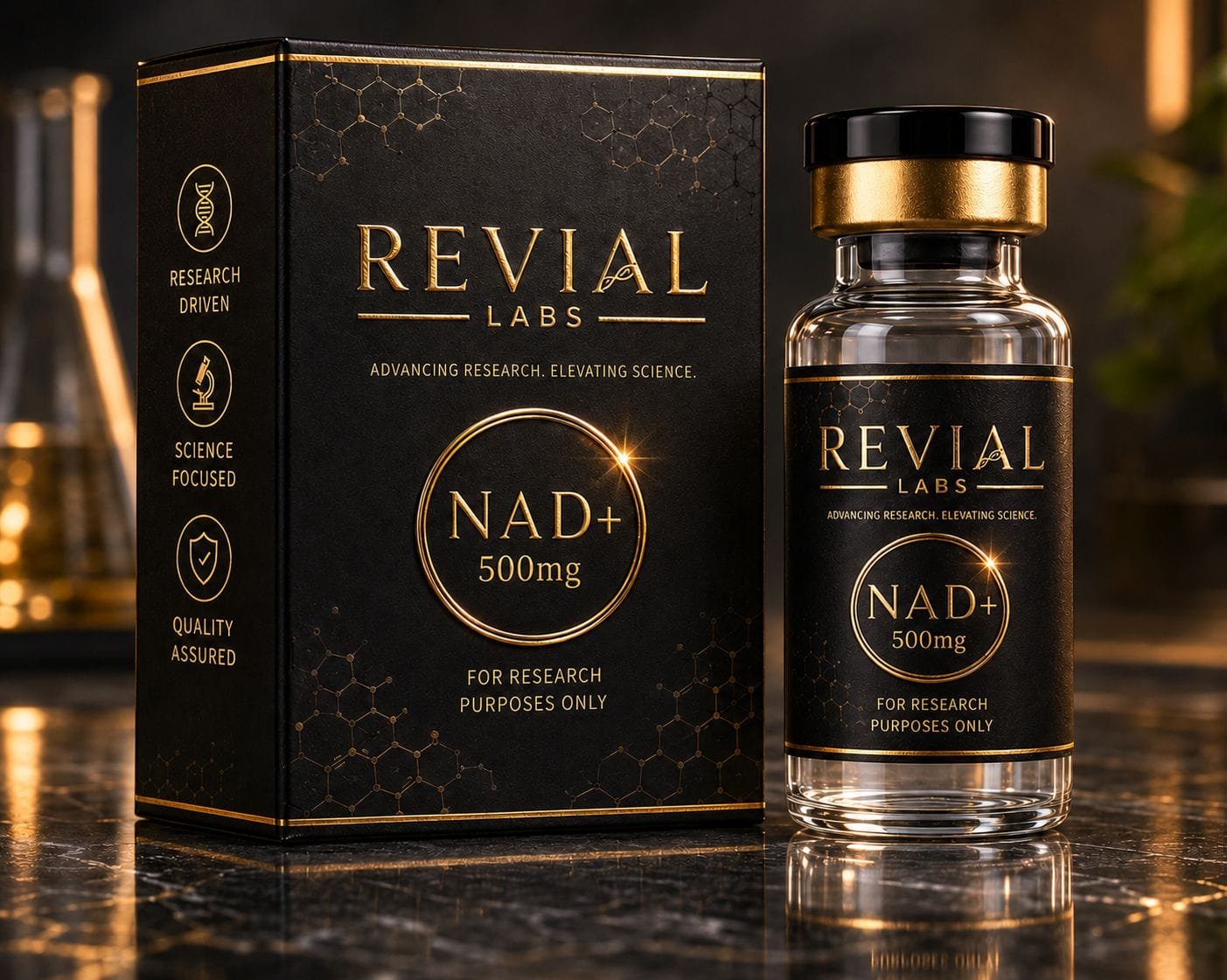
Quick summary: NAD+ (nicotinamide adenine dinucleotide) is a coenzyme involved in hundreds of metabolic reactions, and a key substrate for enzymes such as sirtuins and PARPs. Research interest centres on how NAD+ levels change with age and what that means for cellular metabolism and DNA repair. Revial Labs supplies research-grade NAD+ 500mg as a lyophilised powder from UK stock, for laboratory research use only.
What Is NAD+?
Nicotinamide adenine dinucleotide exists in two main forms: NAD+ (oxidised) and NADH (reduced). Cells switch between the two to carry electrons in energy metabolism, including glycolysis and the citric acid cycle, and to feed the mitochondrial electron transport chain that produces ATP.
NAD+ is also consumed by several enzyme families as a substrate rather than simply recycled:
- Sirtuins — enzymes involved in gene regulation and cellular stress responses.
- PARPs (poly-ADP-ribose polymerases) — enzymes involved in DNA repair.
- CD38 — an enzyme whose activity is studied in relation to NAD+ decline.
Why Is NAD+ Studied in Ageing Research?
Several animal and human tissue studies have reported that NAD+ levels tend to fall with age. Because so many processes depend on it, researchers are investigating whether that decline is linked to changes in mitochondrial function, DNA repair and metabolic health. A large body of work also looks at NAD+ precursors such as nicotinamide riboside (NR) and nicotinamide mononucleotide (NMN), which the body can convert into NAD+.
Much of this research is still early and results are mixed, so it is best read as an active field of study rather than settled science.
NAD+ and Other Cellular-Energy Research Compounds
NAD+ is often discussed alongside MOTS-c, a peptide encoded in mitochondrial DNA, and SS-31, which targets the inner mitochondrial membrane. Each acts at a different point in cellular energy metabolism, so they are studied as separate tools.
Buffered vs Unbuffered NAD+
NAD+ is mildly acidic in solution. Some research-grade NAD+ is supplied buffered, meaning a pH buffer is included so the reconstituted solution sits closer to neutral. When comparing suppliers, check whether the product is buffered and what the stated content per vial is.
Handling and Storage
- Store unopened vials of lyophilised NAD+ at 2–8°C, protected from light and moisture.
- Reconstitute with sterile or bacteriostatic water using sterile technique.
- NAD+ solutions are less stable than the powder, so keep them refrigerated and use them within the period your protocol specifies.
Our reconstitution calculator handles large vial sizes such as 500mg and 1000mg, and our storage guide covers stability before and after mixing.
Is NAD+ Legal in the UK?
NAD+ is not a controlled substance in the UK. Revial Labs supplies it as a research compound for laboratory use only. It is not supplied for human or veterinary use, and nothing in this guide is a recommendation to use it in people.
What to Check When Sourcing NAD+
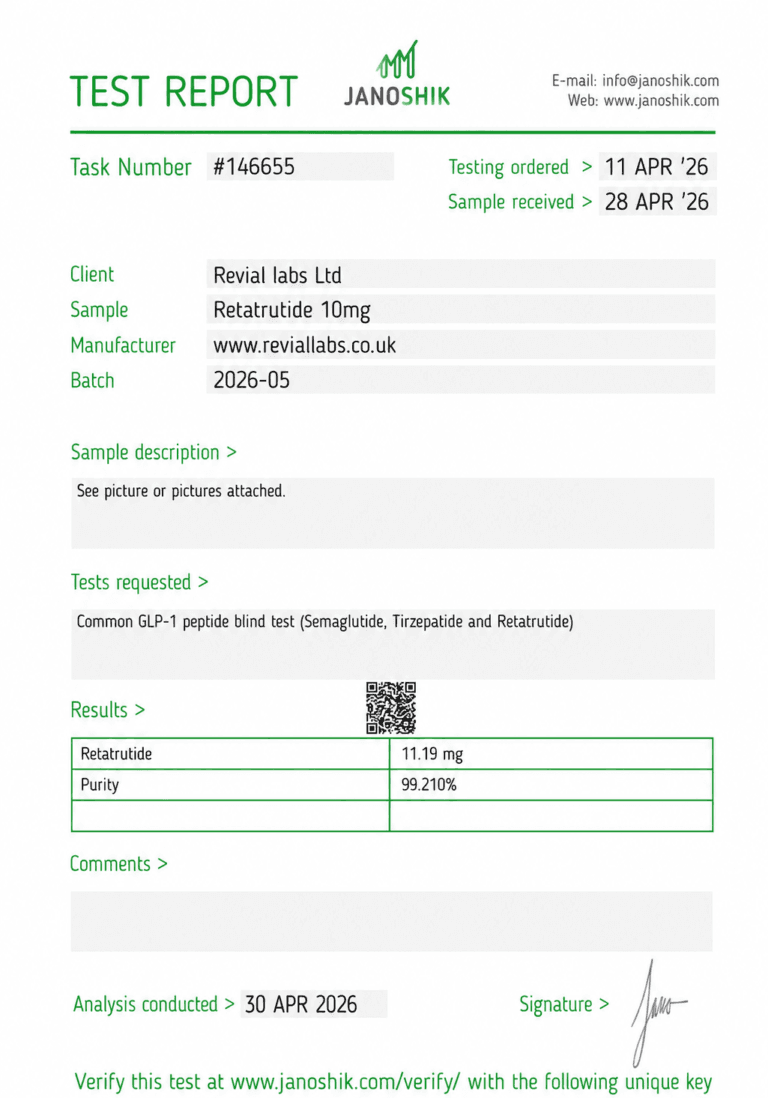
- An independent certificate of analysis confirming identity and purity.
- The stated content per vial (for example 500mg) and whether the product is buffered.
- A batch number on the vial that matches the certificate.
- Clear research-use labelling from a UK company you can contact.
Frequently Asked Questions
What does NAD+ stand for?
Nicotinamide adenine dinucleotide. The “+” refers to its oxidised form.
Is NAD+ a peptide?
No. NAD+ is a coenzyme made from two nucleotides, not a chain of amino acids, although it is often studied alongside peptides in metabolic research.
What is the difference between NAD+ and NMN?
NMN (nicotinamide mononucleotide) is a precursor that cells convert into NAD+. Research uses both, depending on what is being studied.
What does buffered NAD+ mean?
A pH buffer is included so the reconstituted solution is closer to neutral.
How should NAD+ be stored?
Keep the powder at 2–8°C away from light and moisture, and keep reconstituted solutions refrigerated.
All Revial Labs products are supplied strictly for laboratory research use. Not for human consumption, not for veterinary use, and no therapeutic claims are made.