5-Amino-1MQ UK: The Complete Research Guide (2026)
5-Amino-1MQ is one of the newer compounds in metabolic research. It is not a peptide but a small molecule that blocks an enzyme called NNMT, which is unusually active in fat tissue. This guide explains what 5-Amino-1MQ is, how NNMT connects to NAD+ and fat metabolism, what the published studies looked at and what to check when sourcing it in the UK.
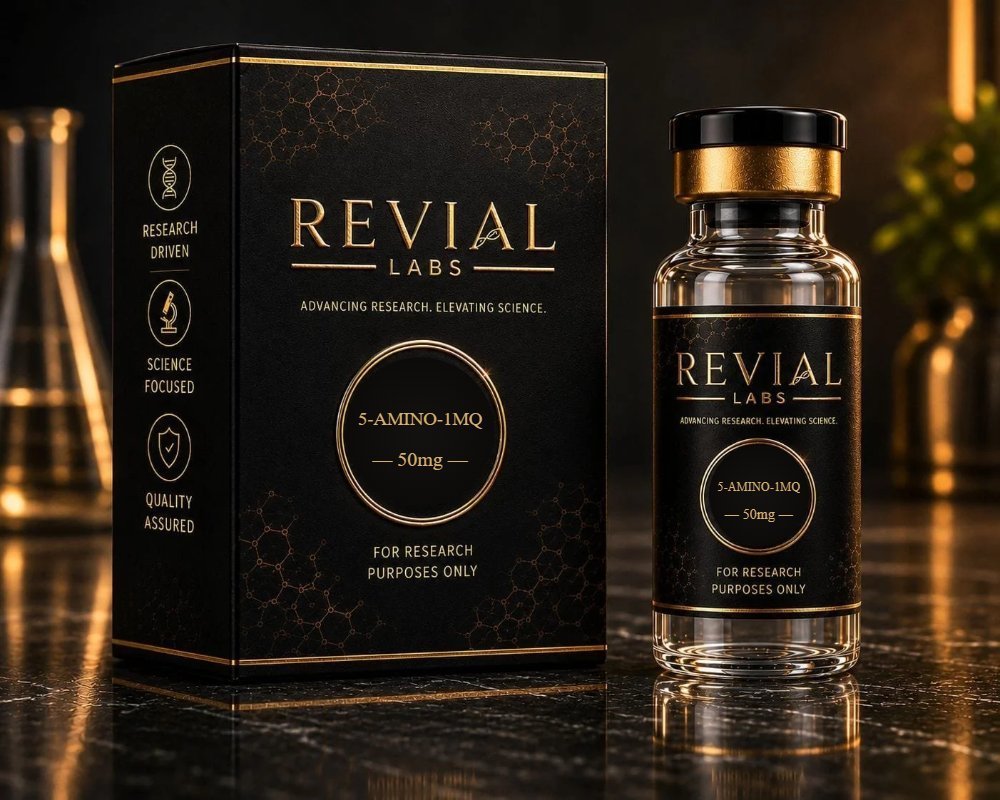
Quick summary: 5-Amino-1MQ (5-amino-1-methylquinolinium) is a selective, cell-permeable inhibitor of nicotinamide N-methyltransferase (NNMT). It was developed at the University of Texas Medical Branch and studied in diet-induced obese mice. Revial Labs supplies research-grade 5-Amino-1MQ 50mg from UK stock, for laboratory research use only. Updated November 2026.
5-Amino-1MQ at a Glance
| Full name | 5-Amino-1-methylquinolinium |
| Type | Small-molecule quinolinium compound (not a peptide) |
| Target | Nicotinamide N-methyltransferase (NNMT) |
| Research area | Fat-cell metabolism, NAD+ salvage, energy expenditure, muscle ageing |
| UK status | Not a licensed medicine. Supplied for laboratory research only |
What Is NNMT?
NNMT is an enzyme that adds a methyl group to nicotinamide (a form of vitamin B3). It is found at high levels in fat tissue and the liver, and it tends to be higher in obesity research models. When NNMT is active, it uses up nicotinamide that cells could otherwise recycle into NAD+, and it consumes SAM, the cell’s main methyl donor.
How Does 5-Amino-1MQ Work?
By blocking NNMT, 5-Amino-1MQ is thought to leave more nicotinamide available for NAD+ production and to change the cell’s methylation balance. In fat-cell studies this was linked to higher NAD+ levels and changes in how fat cells store and use energy.
What Has 5-Amino-1MQ Been Studied For?
- Fat cells in the lab. Studies on cultured fat cells (adipocytes) reported less fat storage when NNMT was blocked.
- Diet-induced obese mice. A 2018 study by Neelakantan and colleagues reported reduced body weight and fat mass, smaller fat cells and lower cholesterol in obese mice, without a change in food intake.
- Diet combination studies. Later mouse work combined NNMT inhibition with a reduced-calorie diet.
- Muscle ageing. Research in older mice looked at NNMT inhibition and muscle stem-cell function.
There are no published human clinical trials of 5-Amino-1MQ, so the evidence base is still early-stage animal and cell research.
What to Check When Buying 5-Amino-1MQ in the UK
- Independent COA with HPLC purity and identity confirmation.
- Salt form. 5-Amino-1MQ is usually supplied as a salt (for example iodide); the COA should state it.
- UK stock from a UK company with clear research-use labelling.
Storage and Reconstitution
Store at 2–8°C, sealed and away from light. After mixing with bacteriostatic water, keep refrigerated. Use our peptide calculator to work out concentration for a 50mg vial.
Frequently Asked Questions
Is 5-Amino-1MQ a peptide?
No. It is a small molecule, although it is often sold alongside research peptides.
How is 5-Amino-1MQ related to NAD+?
Blocking NNMT is thought to leave more nicotinamide available for the cell to recycle into NAD+.
Where can I buy 5-Amino-1MQ in the UK?
Revial Labs supplies 5-Amino-1MQ 50mg research vials from UK stock with tracked dispatch.
All products supplied by Revial Labs are for in vitro laboratory research use only. Not for human or veterinary use. This article does not give medical advice or make therapeutic claims.