Glutathione UK: The Complete Research Guide (2026)
Glutathione is often called the body’s “master antioxidant”. It is a small tripeptide found in almost every cell, and it is one of the most studied molecules in oxidative-stress research. This guide explains what glutathione is, how it works, the difference between its reduced and oxidised forms, what it has been studied for and what to check when sourcing it in the UK.
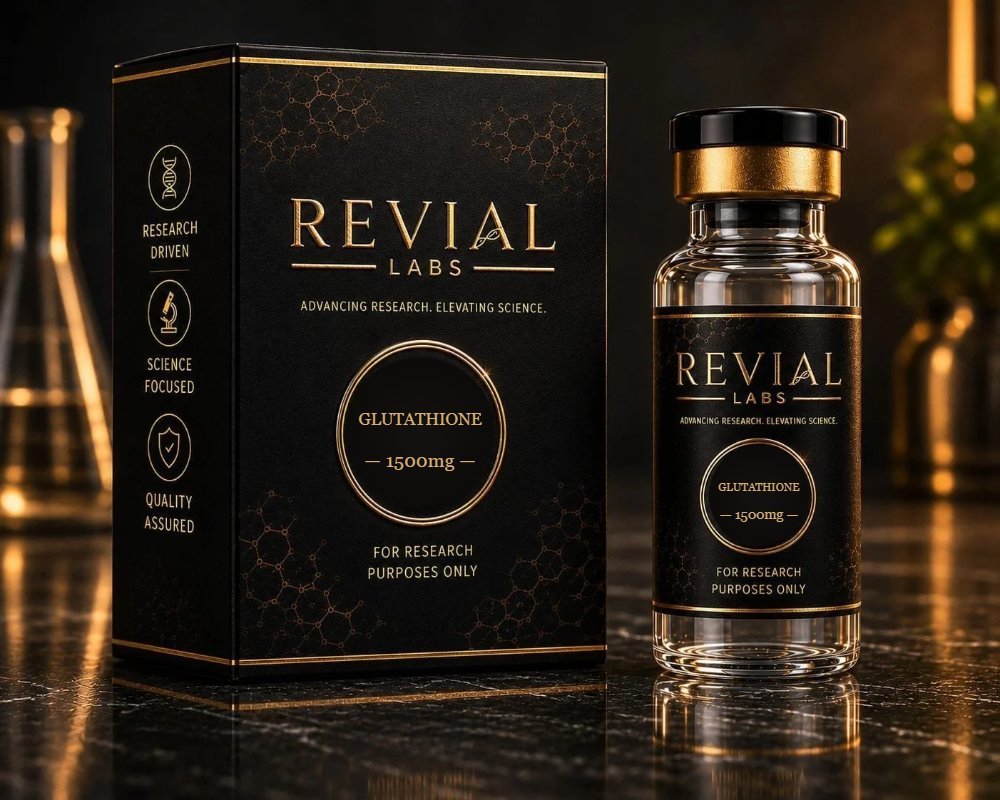
Quick summary: Glutathione (GSH) is made of three amino acids: glutamate, cysteine and glycine. Its sulphur-containing cysteine lets it neutralise reactive oxygen species and help the liver process toxins. Revial Labs supplies research-grade Glutathione 1500mg from UK stock, for laboratory research use only. Updated November 2026.
Glutathione at a Glance
| Also known as | GSH, L-glutathione (reduced) |
| Structure | γ-L-Glutamyl-L-cysteinyl-glycine (tripeptide) |
| CAS number | 70-18-8 |
| Research area | Oxidative stress, liver detoxification, skin pigmentation, ageing |
| UK status | Supplied as a research compound for laboratory use only |
What Is Glutathione?
Glutathione is made inside cells from three amino acids. Unusually, the glutamate is linked through its side chain (a “gamma” bond), which protects glutathione from normal protein-digesting enzymes. Cells keep high levels of it, especially in the liver.
How Does Glutathione Work?
- Antioxidant defence. The thiol (–SH) group on cysteine donates electrons to neutralise reactive oxygen species. Two glutathione molecules then join to form oxidised glutathione (GSSG).
- Recycling. The enzyme glutathione reductase turns GSSG back into active GSH. The GSH:GSSG ratio is a common research marker of oxidative stress.
- Detoxification. Glutathione S-transferase enzymes attach glutathione to toxins and drug by-products so they can be removed. This is why glutathione is central to liver research, including paracetamol toxicity models.
- Recharging other antioxidants such as vitamins C and E.
What Has Glutathione Been Studied For?
- Oxidative stress in ageing, metabolic and neurodegenerative research models.
- Liver research, including toxin and drug-metabolism studies.
- Skin pigmentation. Glutathione has been studied for its effect on melanin production, which is why it appears in skin research.
- Cellular ageing, where glutathione levels have been reported to fall with age.
For related research compounds, see our NAD+ guide and GHK-Cu guide.
What to Check When Buying Glutathione in the UK
- Reduced form (GSH). Check the COA confirms reduced glutathione, not mainly the oxidised form.
- Independent COA with HPLC purity and identity.
- UK stock from a UK company with clear research-use labelling.
Storage and Reconstitution
Store lyophilised vials at 2–8°C, sealed and away from light and air, as glutathione oxidises over time. After mixing with bacteriostatic water, keep refrigerated. A 1500mg vial is a large amount of powder, so our peptide calculator offers up to 5 mL of water for it.
Frequently Asked Questions
Is glutathione a peptide?
Yes. It is a tripeptide, made of three amino acids, though it is much smaller than most research peptides.
What is the difference between GSH and GSSG?
GSH is the active, reduced form. GSSG is the oxidised form made when two GSH molecules join after neutralising free radicals.
Where can I buy glutathione in the UK?
Revial Labs supplies Glutathione 1500mg research vials from UK stock with tracked dispatch.
All products supplied by Revial Labs are for in vitro laboratory research use only. Not for human or veterinary use. This article does not give medical advice or make therapeutic claims.